Physics

Introduction to Work, Power & Energy

These concepts help us understand how forces cause movement, and how energy is transferred and conserved in physical systems.

Key Concepts

Work

Work is said to be done when a force is applied on an object and it causes displacement.
W = F × d × cos(θ)
Unit: Joule (J)
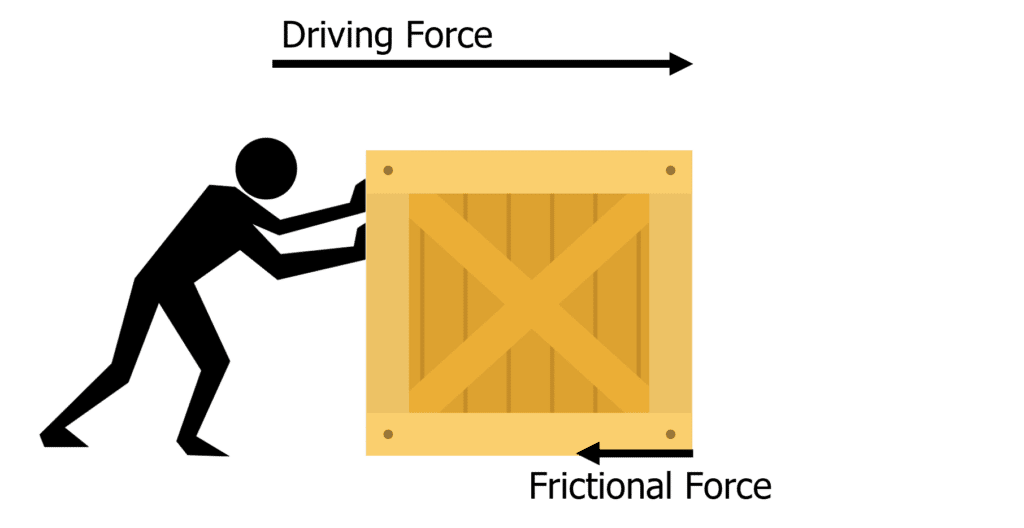
Work

Power

Power is the rate at which work is done or energy is transferred.
P = W/t
Unit: Watt (W)
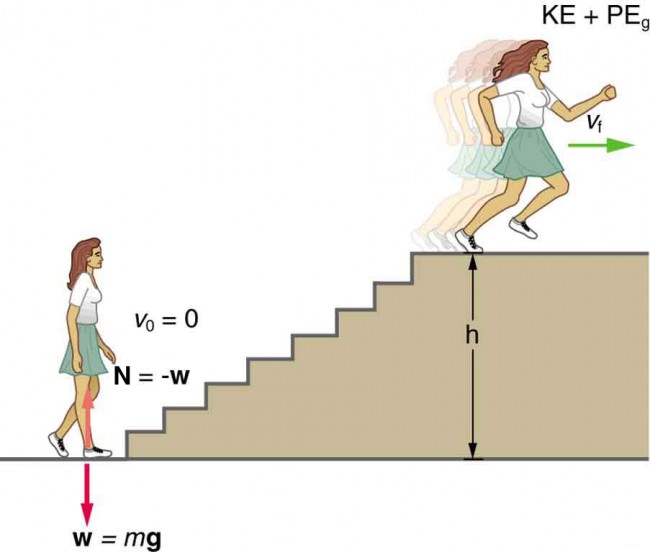
Power

Energy

Energy is the capacity to do work. It exists in different forms like kinetic, potential, thermal, etc.
Unit: Joule (J)

Energy

Equations

Work

W = F × d × cos(θ)

Power

P = W / t

Kinetic Energy

KE = ½mv²

Potential Energy

PE = mgh

Law of Conservation of Energy

Energy can neither be created nor destroyed. It can only be transformed from one form to another, but the total energy of an isolated system remains constant.

Energy Conservation

Example Problems

1. A box is pulled with a force of 20 N through 5 m. What is the work done?

Solution: W = F × d = 20 × 5 = 100 J

2. An object of mass 2 kg is lifted to a height of 10 m. Find potential energy.

Solution: PE = mgh = 2 × 10 × 10 = 200 J

3. A car does 1000 J of work in 10 seconds. What is its power?

Solution: P = W / t = 1000 / 10 = 100 W

4. Find the kinetic energy of a 3 kg object moving at 4 m/s.

Solution: KE = ½mv² = 0.5 × 3 × 16 = 24 J